



Is there a loophole in the new strata laws?
February 2, 2018
A recent decision by the NSW Civil and Administrative Tribunal has sparked concern about a potential loophole in the new strata legislaton
A recent decision by the NSW Civil and Administrative Tribunal has sparked concern about a potential loophole in the new strata legislation that might allow unruly lot owners to ignore NCAT orders without penalty. The new strata legislation came into force on 30 November 2016 (find out more here).
As a result, the owners corporation sought an order to impose a pecuniary penalty for contravention of the adjudicator’s order under the Strata Schemes Management Act 2015 (NSW) (SSMA 2015), or (in the alternative) under the 1996 Act.
The Tribunal decided to impose the penalty under section 202 of the 1996 Act having regard to the transitional provisions in the SSMA 2015 and section 30(1) of the Interpretation Act 1987 (NSW).
However, a key issue raised in the Tribunal’s decision was that the penalty amount could not be recovered under section 248 of the SSMA 2015 because the owners did not have standing as an “authorised officer” to commence proceedings under section 77 of the Civil and Administrative Tribunal Act 2013 (CATA). An authorised officer who could commence proceedings is the Minister, or a person with the appropriate written consent per section 76 of the CATA. This had led to industry-wide speculation about a potential enforcement loophole in existing legislation.
You can read the full decision here.
Does this mean you can ignore an NCAT order to comply with a by-law?
No. For breaches that have occurred (or will occur) since commencement of the SSMA 2015 there is a new regime for by-law enforcement which involves a different protocol (initiated by the owners corporation) and penalties, which are recoverable as a judgment debt.
For enforcement of by-law compliance orders made prior to the commencement of the SSMA 2015, it would seem the 1996 Act provisions will operate pursuant to the transitional provisions in the SSMA 2015 (as outlined in the Anderson Decision).
How does the new regime for by-law compliance work?
Under the new regime, by-law enforcement is initiated by an owners corporation issuing a Notice to Comply (per section 146 of the SSMA 2015). If a person continues to breach a by-law breach after a Notice to Comply is issued, then the owners corporation may apply to NCAT (per section 147 of the SSMA 2015) to seek an order for the offending person to pay a penalty of up to $1,100.
If there is a further by-law breach within 12 months after NCAT imposes an initial penalty, the owners corporation may make an application for the Tribunal to impose a further penalty of $2,200. A penalty imposed under section 147 of the SSMA 2015 may be registered and enforced as a judgment debt (see section 78 of the CATA).
We understand that the new regime was intended to streamline enforcement with a view to side stepping some of the complexities (and expense) around seeking orders to initiate an enforcement process.
So where to from here?
Despite the new SSMA 2015 regime for by-law enforcement, industry concern remains for:
- The adequacy of the mandated penalties contemplated in section 147 of the SSMA 2015 for extreme or prolonged breaches of a by-law (e.g. what if the benefit of the breach outweighs the maximum penalties contemplated in SSSMA 2015?)
- Whether or not there are enforcement issues arising from the relatively narrow category of an “authorised officer” (per s77 of the CATA).
It has been reported in the media that NSW Fair Trading is considering whether statutory amendments may be warranted in 2018 in light of certain statements made in the Anderson Decision.
However, it is unclear what form these amendments will take, or if any will be considered necessary. So for the moment, it’s a case of “watch this space…”, and be aware of the Anderson Decision and how it might impact you.
News
Special Counsel of the Year Award 2026
Congratulations to Ole Mitrevski, who has been recognised as Special Counsel of the Year at the Australian Law Awards 2026. We are incredibly proud of you Ole on this well-deserved achievement.

August 5, 2026
New Special Counsel Promotion
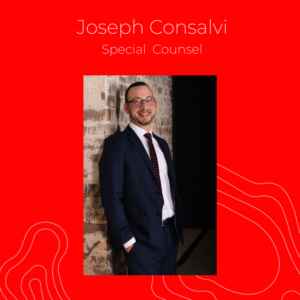
It is with great pleasure that we announce Joseph’s promotion to Special Counsel. Joseph is known and respected across the legal and property industries, particularly for his work in government and airport transactions, major developments and renewable energy projects.
Joseph is an exceptional leader and a skilled technical lawyer. We are proud to have him on our team.
Congratulations Joseph Consalvi, from all of us at Massons, on this significant career milestone.
July 29, 2026
10 years of Massons

July 1, 2026
Doyle Guide 2026
Congratulations to our Jodie Masson, Leisha de Aboitiz and Ole Mitrevski, all recognised for their individual contributions this year in Doyles, as well as Massons. This is special for us as rankings in Doyles are determined by votes collected by our peers in the legal profession. We are grateful to be part of this industry.

April 9, 2026
Legal 500 - Asia Pacific 2026 - Real Estate
Thank you to our clients, our team and Legal 500 for this recognition!


February 5, 2026
Australian Law Awards - Property Team of the Year 2025
Thank you to our clients and colleagues for their strong support and of course to our amazing team. To be named property team of the year at the Australian Law Awards for the second year in a row is a shared success and we couldn’t be prouder. It’s a privilege to do what we love, with a team we love, and for clients that we love, every day!

August 18, 2025

Australia's commercial property law experts